Rotator Cuff Tear
The rotator cuff is a group of four tendons that centers the ball of the shoulder in the socket and helps lift and rotate the arm. Tears range from partial-thickness damage to full-thickness detachment.
Common symptoms:
Pain over the lateral shoulder, often worse overhead or at night
Weakness or loss of endurance
Pain with lifting away from the body
Sometimes little pain despite a tear on MRI
How it is evaluated:
History and examination come first. X-rays assess arthritis, acromial morphology and other bony findings. Ultrasound or MRI can define tendon integrity when the result will change treatment.
If surgery is selected:
Repair is considered for appropriate symptomatic full-thickness tears, acute traumatic tears, progressive weakness, high functional demands or failure of well-executed nonsurgical care. Options can include arthroscopic repair, augmentation in selected cases, or tendon transfer/reconstruction when a tear is irreparable. Often, the long head of the biceps tendon (LHBT) needs to be fixed at the time of surgery with either a biceps tenodesis or tenotomy.
Recovery expectations:
Recovery after repair is measured in months. Early priorities are protection and passive motion, followed by active motion and strengthening once pain is minimal and motion is restored. Return to heavy lifting or sport requires healing plus restoration of motion, strength and control.
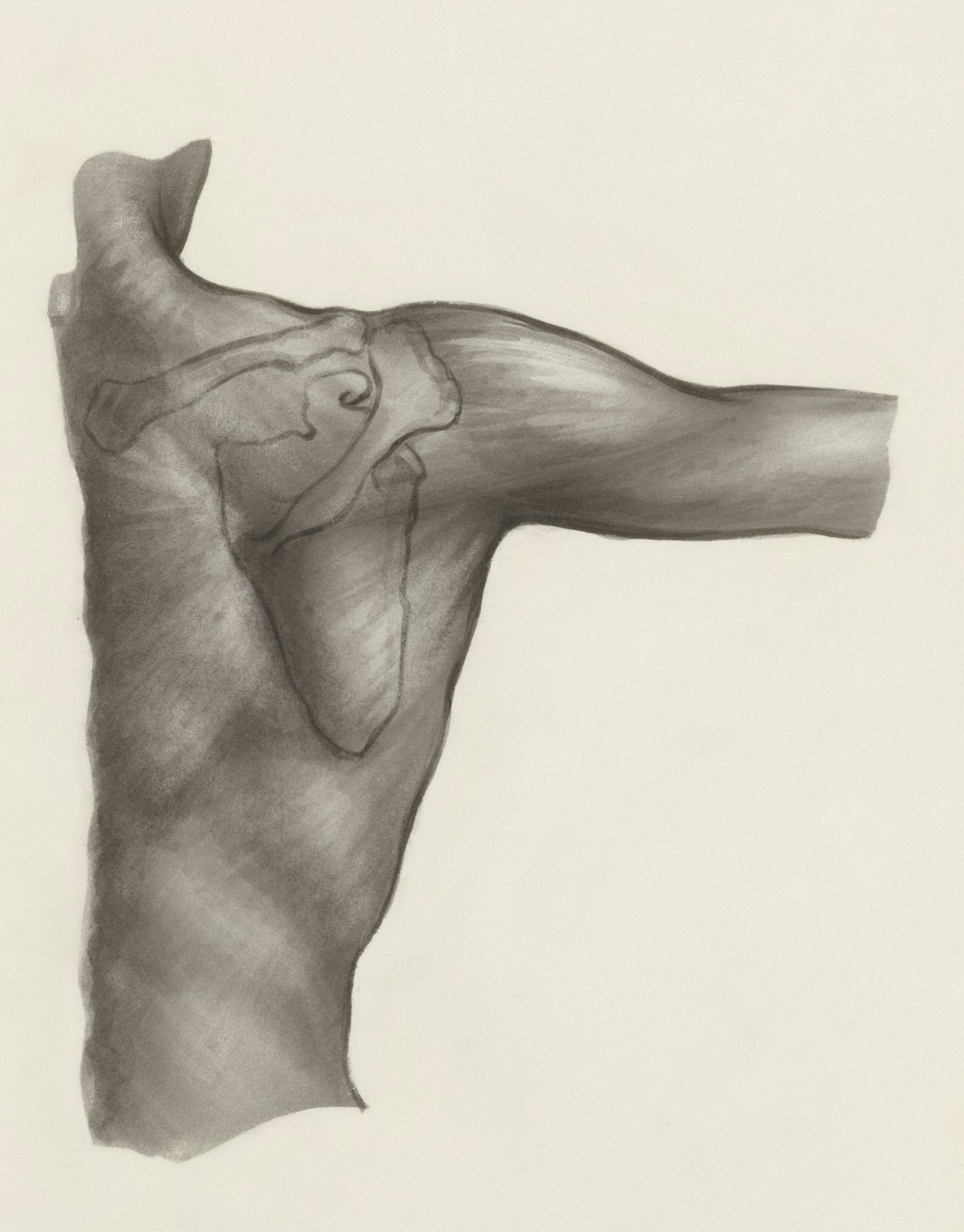
Anterior Shoulder Instability
Instability occurs when the humeral head translates excessively or dislocates from the socket. A traumatic anterior dislocation can injure the labrum (Bankart lesion), capsule and bone.
Common symptoms:
A shoulder that dislocates or “slips” out of place
A feeling of apprehension with the arm abducted and externally rotated
Pain after instability episodes
Reduced confidence in contact, overhead, or throwing positions
How it is evaluated:
It is important to get a sense for the number and mechanism of instability events. Sport, age, laxity, and prior surgery are also important considerations. Imaging begins with x-rays to rule out fractures and assess for bony deformities. Advanced imaging is usually required in the form of an MRI to evaluate for labral, capsular, and bony damage. Sometimes a CT scan is required to better visualize changes to the bone.
If surgery is selected:
Bankart repair is a common soft-tissue stabilization. Remplissage may be added for selected Hill-Sachs lesions. Latarjet or other bone-block procedures are considered when bone loss, recurrence risk or failed prior stabilization makes soft-tissue repair less reliable.
Recovery expectations:
Rehabilitation restores protected motion first, then strength, dynamic stability and sport-specific confidence. Return to collision or overhead sport is criterion-based and procedure-specific, but usually does not occur before 6 months post-operatively.
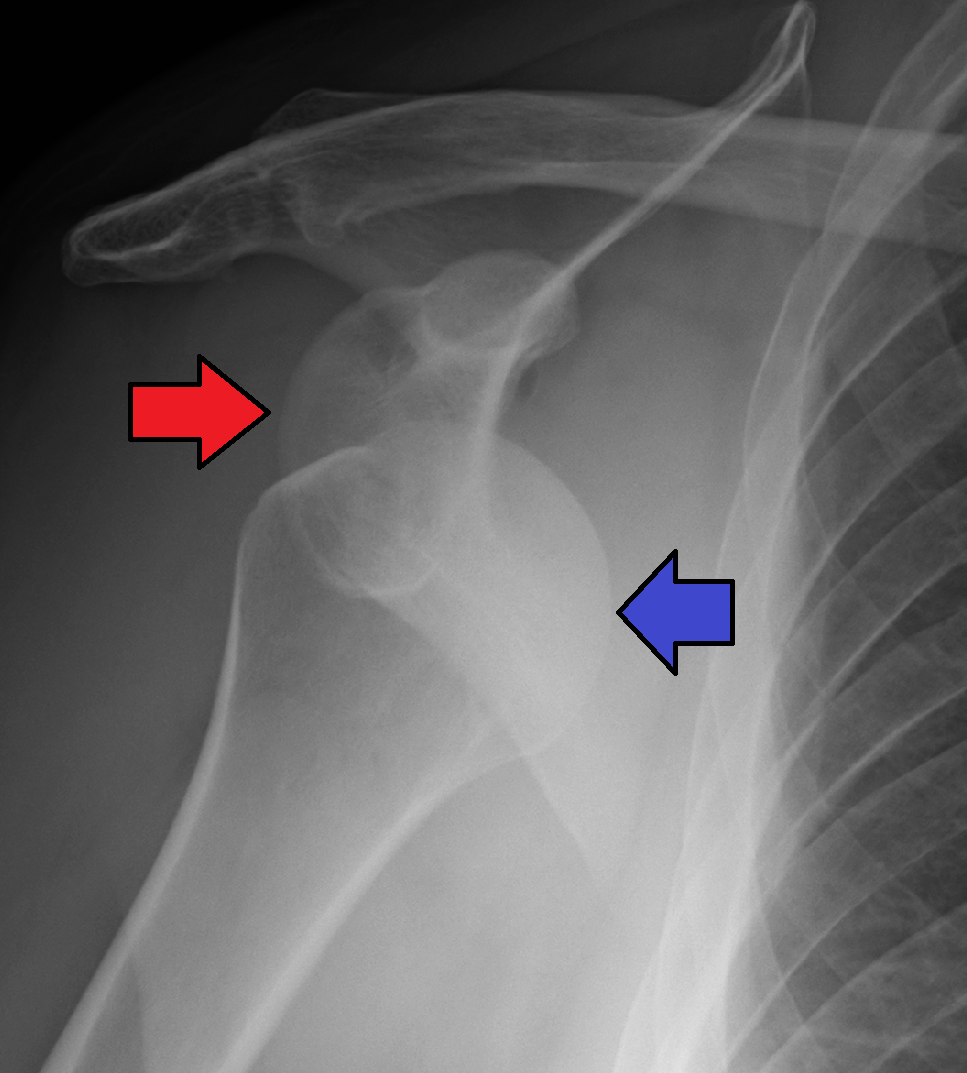
By James Heilman, MD - Own work, CC BY-SA 4.0, https://commons.wikimedia.org/w/index.php?curid=49111463
SLAP Tear and Biceps Tendinitis
The long head of the biceps attaches to the superior labrum and their pathology is often lumped together in what is called the biceps-labral complex. Pain can arise from the tendon, surrounding structures, or the superior labrum itself. Often the physical exam is more important than the MRI findings.
Common symptoms:
Deep anterior or superior shoulder pain
Pain with lifting, throwing, or resisted elbow flexion/extension
Clicking or mechanical symptoms in some patients
Loss of throwing performance
How it is evaluated:
Diagnosis integrates physical examination, age/activity, associated rotator-cuff or instability findings, and selective imaging.
If surgery is selected:
Surgical options include SLAP repair in selected patients and biceps tenodesis when symptoms are more consistent with biceps-labral pathology and patient factors favor tenodesis.
Recovery expectations:
After tenodesis, the fixation site is protected from active/resisted biceps loading early. After SLAP repair, shoulder motion and loading are advanced while protecting the repaired labrum. In both cases, return sports participation begins around the 4 month mark assuming a successful rehabilitation phase.
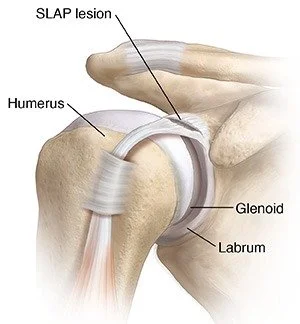
Copyright: © Krames StayWell, Creator: Eric Olson Illustrations and Design
Shoulder Arthritis
Glenohumeral arthritis is loss of the smooth cartilage surfaces of the shoulder joint.
Common symptoms:
Deep joint pain and stiffness
Pain with motion and at night
Grinding or loss of motion
Difficulty reaching overhead or behind the back
How it is evaluated:
X-rays are usually the key study. CT or MRI may be used for surgical planning and/or to evaluate rotator-cuff integrity.
If surgery is selected:
Arthroplasty (i.e. joint replacement) is considered when pain and functional loss remain unacceptable. Anatomic total shoulder arthroplasty generally requires a functional rotator cuff, whereas reverse shoulder arthroplasty changes shoulder mechanics and does not require a functional rotator cuff.
Recovery expectations:
Recovery emphasizes protection of the surgical repair, restoration of motion and gradual strengthening. Expectations may differ slightly between anatomic and reverse arthroplasty, particularly as it relates to range of motion.
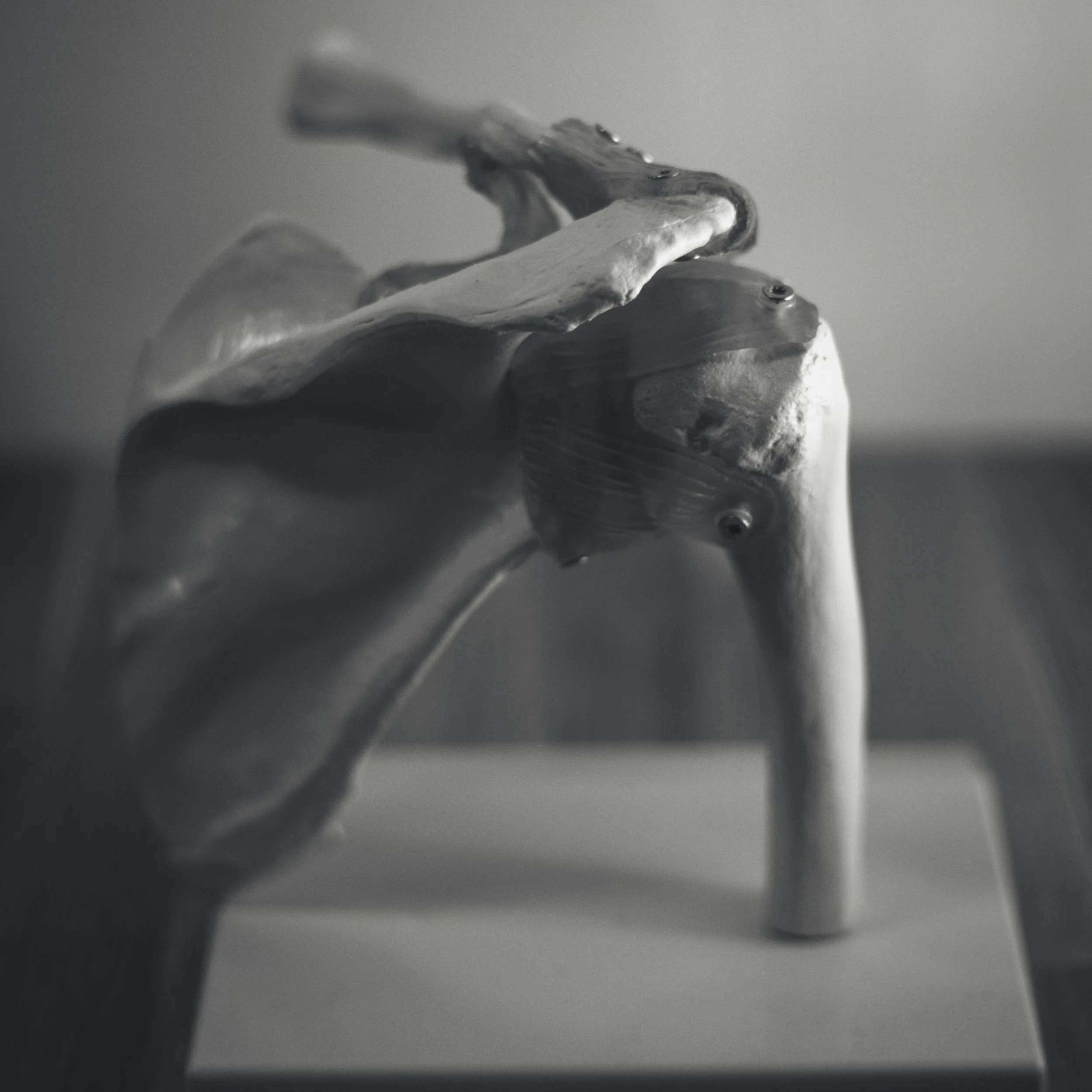
Frozen Shoulder / Adhesive Capsulitis
Frozen shoulder is a painful condition in which the capsule becomes inflamed and contracted, producing global loss of active and passive motion.
Common symptoms:
Progressive pain followed by stiffness
Difficulty reaching overhead, behind the back, or across the body
Night pain
Loss of both active and passive motion
How it is evaluated:
The diagnosis is primarily clinical. X-rays will help exclude arthritis. Diabetes and thyroid disease are common associations but are not required. MRI may be ordered to confirm the diagnosis, but adhesive capsulitis is not always evident on MRI.
If surgery is selected:
For persistent severe stiffness despite adequate nonsurgical care, manipulation under anesthesia and/or arthroscopic capsular release can be considered.
Recovery expectations:
The postoperative priority after release is maintaining the motion gained at surgery with early, frequent rehabilitation while controlling pain.
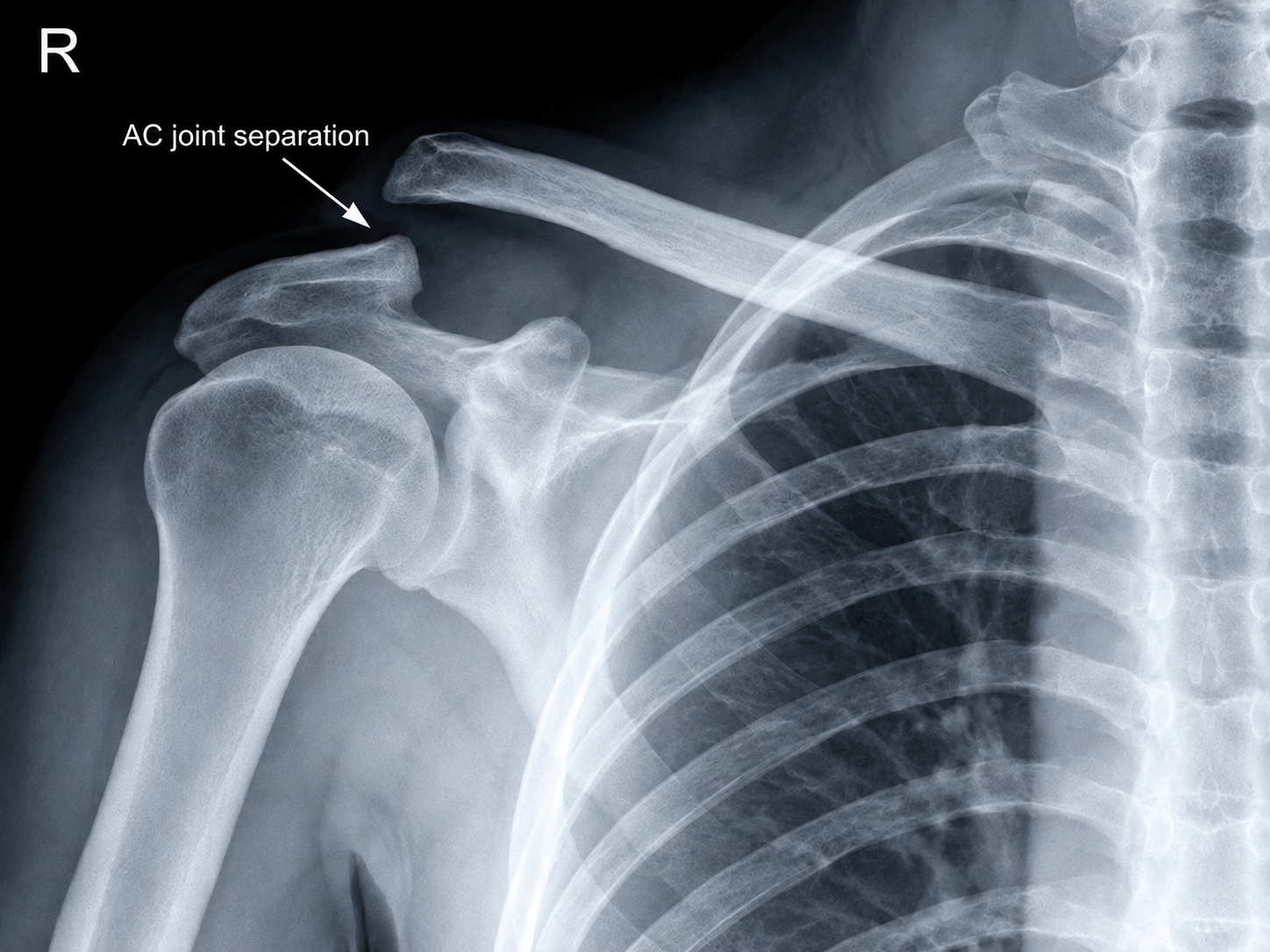
AC Joint Separation
An acromioclavicular (AC) separation is a traumatic injury to the ligaments stabilizing the outer clavicle to the acromion and coracoid, most often after a fall directly onto the shoulder.
Common symptoms:
Pain and tenderness directly over the top of the shoulder
Swelling or bruising after injury
A visible bump or step-off in higher grade injuries
Pain with cross-body motion or carrying
How it is evaluated:
Diagnosis is usually based on examination and shoulder/AC-joint radiographs. Injury grade and the direction/degree of displacement help guide treatment.
If surgery is selected:
Surgical reconstruction is considered for selected unstable high-grade injuries or persistent painful dysfunction after nonsurgical treatment. Techniques reconstruct the coracoclavicular and/or AC stabilizers.
Recovery expectations:
Recovery after coracoclavicular (CC) ligament reconstruction is gradual, with an initial period of sling protection followed by progressive range of motion and strengthening. Return to unrestricted activity and sports typically occurs over several months as healing, strength, and shoulder function recover.
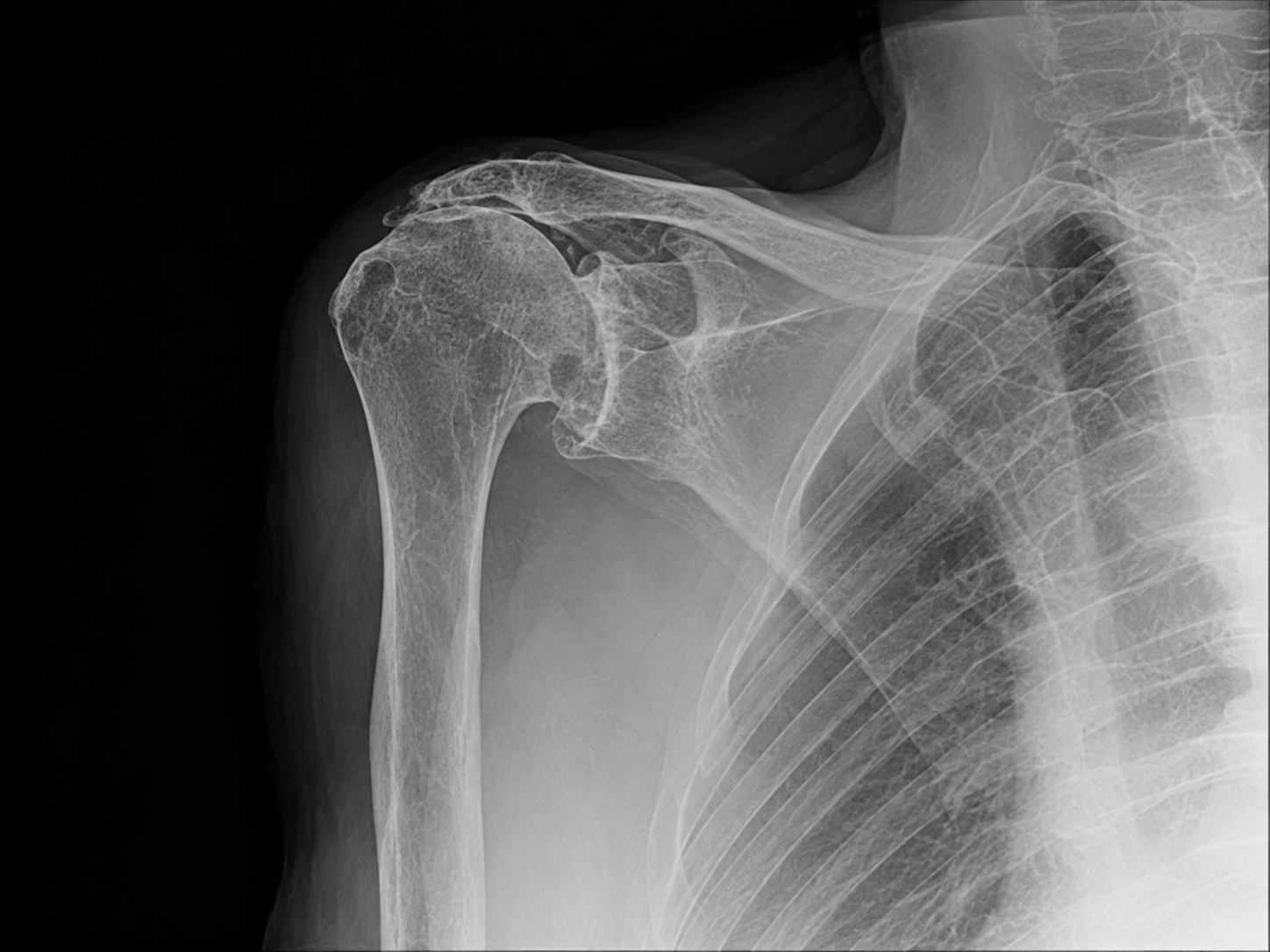
Rotator Cuff Arthropathy
Rotator cuff tear arthropathy is advanced shoulder dysfunction caused by a chronic massive rotator-cuff tear together with altered joint mechanics and glenohumeral degeneration.
Common symptoms:
Pain and weakness, especially with elevation
Loss of active overhead motion that may exceed passive motion loss
Grinding or stiffness
Difficulty with reach and lifting
How it is evaluated:
X-rays often show superior migration of the humeral head and arthritic change. Examination assesses deltoid function, remaining rotator cuff function and neurologic status. A CT scan may assist surgical planning.
If surgery is selected:
Reverse total shoulder arthroplasty is a common reconstructive option for painful cuff-tear arthropathy with substantial functional loss because it allows the deltoid to substitute for deficient rotator-cuff mechanics.
Recovery expectations:
Patients recover at different speeds following reverse total shoulder arthroplasty, however, recovery emphasizes protection of the surgical repair, restoration of motion and gradual strengthening wth successful return to most activities.
AC Joint Arthritis
AC joint osteoarthritis is degeneration of the small joint between the distal clavicle and acromion. It is common on imaging and only requires treatment when it matches the patient’s symptoms.
Common symptoms:
Focal pain at the top of the shoulder
Pain with cross-body adduction, bench press, or push-up positions
Tenderness directly over the AC joint
Pain when carrying a bag or reaching across the body
How it is evaluated:
Diagnosis is based on focal examination findings plus radiographs. A carefully placed diagnostic injection can sometimes help determine whether the AC joint is truly the pain generator.
If surgery is selected:
Persistent isolated symptomatic AC arthritis may be treated with distal clavicle excision after other shoulder pain generators have been addressed. This can be performed arthroscopically or as a “mini-open” procedure.
Recovery expectations:
Patients recover at different speeds following reverse total shoulder arthroplasty, however, recovery emphasizes protection of the surgical repair, restoration of motion and gradual strengthening wth successful return to most activities.